
Tokyo on a Layover —
Making Every Hour at HND Count
Haneda's city-centre location is a genuine advantage. With the right plan, even a 5-hour stopover can deliver a real taste of Tokyo.
Is a Tokyo layover actually worth it?
Yes — and Haneda makes it unusually practical. Unlike many long-haul hubs that sit an hour-plus from downtown, HND is about 30 minutes from central Tokyo by monorail or Keikyu rail. That proximity changes the maths: what would be a borderline trip from a distant airport becomes genuinely comfortable from Haneda.
Tokyo rewards almost any amount of time you give it. A 4-hour window gets you a bowl of ramen and a walk through a neighbourhood. A full day opens up temples, world-class food markets, and the neon spectacle of Shibuya crossing. The key is matching your plan to your layover length — which is exactly what this guide does.
For everything happening inside the terminal itself — the Edo Wonderland floor, the ANA and JAL lounges, and the rooftop observation deck — see our Tokyo Haneda (HND) airport guide. This page focuses on getting you into the city and back.
What to do based on your layover length
The rule of thumb: subtract 90 minutes for transit each way (monorail + walking + check-in buffer), then plan your city time inside what remains. For layovers under 4 hours, the airport itself — particularly its Edo-themed 5th floor and observation deck — is honestly the better bet. Check our guide to calculating real buffer time before committing to a city trip.
4–5 hours total: Stay near the monorail line. You have time for one neighbourhood and one meal — Hamamatsucho or Shinagawa are closest and easiest.
- 1Board the Tokyo Monorail at HND International Terminal~20 min to Hamamatsucho. IC card or contactless.
- 2Walk Shiba Park & Tokyo Tower base15-min stroll — the tower is visible even if you skip the interior.
- 3Ramen lunch at a nearby shopPlenty of options around Hamamatsucho station — budget 30–40 min.
- 4Return monorail to HNDAllow 25 min travel + 45 min security & immigration buffer.
6–8 hours total: You can reach central Tokyo comfortably. Shibuya, Shinjuku, or Harajuku all work — pick one and explore it properly rather than rushing between all three.
- 1Keikyu Rail to Shinagawa, transfer to JR Yamanote Line~35 min to Shibuya. Buy an IC card (Suica or Pasmo) at HND — usable everywhere.
- 2Shibuya Crossing & Scramble Square rooftopThe crossing is free; the Scramble Square observation deck charges admission but the view is unmatched.
- 3Lunch in Shibuya or HarajukuTry a tempura set at a teishoku restaurant, or grab a Japanese crepe on Takeshita Street.
- 4Walk Yoyogi Park (15 min from Harajuku station)Free, peaceful, and a genuine slice of everyday Tokyo life.
- 5Return via Yamanote → Shinagawa → Keikyu to HNDAllow 50 min total travel + 60 min airport buffer.
10–14 hours total: This is the sweet spot. You can do Shibuya, wander Yanaka or Asakusa (old-Tokyo feel), eat well, and still be back comfortably.
- 1Early arrival — breakfast at Tsukiji Outer MarketThe inner wholesale market is closed to tourists, but the outer stalls open early. Fresh tamagoyaki, sushi, and coffee.
- 2Senso-ji Temple, AsakusaTokyo's oldest temple and the surrounding Nakamise shopping street. Best before 10am while crowds are thin.
- 3Yanaka district — the neighbourhood time forgotOld wooden houses, independent shops, a cemetery-turned-park. 20 min by subway from Asakusa.
- 4Lunch in Ueno or AkihabaraUeno has a brilliant ramen and soba scene; Akihabara is a 10-min walk and worth it even if you're not into electronics.
- 5Shibuya for the evening golden hourScramble Square at dusk is one of the best city views in Asia.
- 6Return to HND — allow 90 min before departureKeikyu from Shinagawa is the most direct route.
24 hours or more: Book a transit hotel near Shinagawa or central Tokyo and treat it as a proper short visit. The city is yours.
- 1Check in to a hotel in Shinjuku, Shibuya, or GinzaMany hotels have same-day or next-morning checkout. Store luggage and go light.
- 2Evening: Shinjuku Golden Gai or Omoide YokochoTiny atmospheric bars and yakitori stalls — the most atmospheric few streets in Tokyo.
- 3Morning: Tsukiji breakfast, then Hamarikyu GardensOne of Tokyo's best traditional gardens, right on the waterfront.
- 4Afternoon: choose your deep diveTeamlab Planets (Toyosu), the Mori Art Museum (Roppongi), or a full Asakusa–Ueno–Akihabara loop.
- 5Return to HND with 2 hours to spareCheck our HND transit guide for up-to-date train options and terminal info.
Top Tokyo districts worth visiting on a layover
Tokyo has distinct neighbourhoods that each feel like a different city. For a layover, the choice matters — pick based on what you want to feel and how far you can travel.
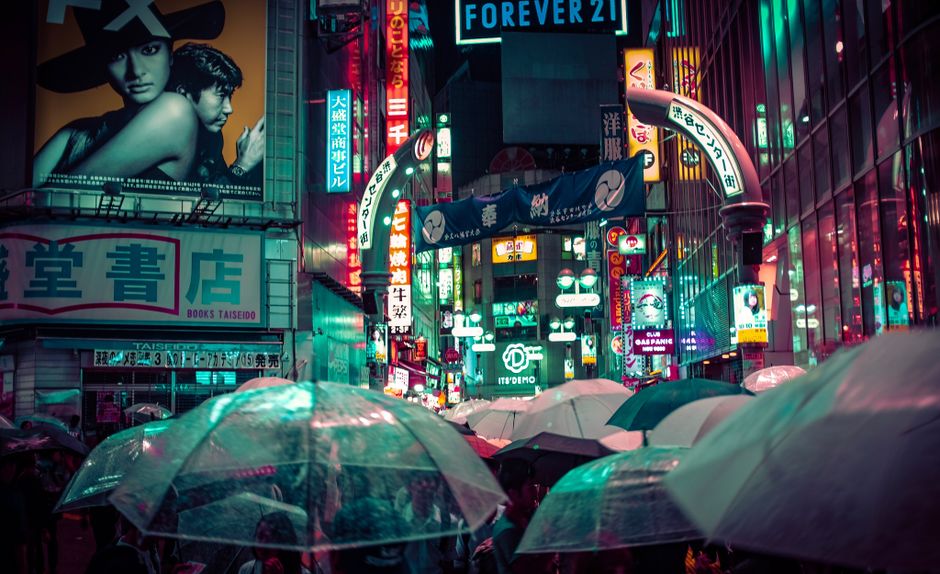
Shibuya
The crossing, the neon, the energy. Scramble Square's rooftop gives you the view you've seen in every photo — go at dusk for best light.
Shinjuku
Massive, loud, and endlessly interesting. Golden Gai for tiny bars, Omoide Yokocho for yakitori, Kabukicho for pure spectacle.
Asakusa
The old city. Senso-ji temple, rickshaws, craft shops, and the feel of pre-modern Tokyo still visible between the souvenir stalls.
Shinagawa
Closest to the airport. Less touristy but genuinely interesting — the old Tokaido road, Sengakuji temple, and good local ramen shops.
Yanaka
Slow Tokyo. One of the few neighbourhoods that survived WWII largely intact. Wooden houses, a famous cemetery-park, and independent coffee spots.
Ginza
Tokyo's answer to Paris's Rue du Faubourg. Wide boulevards, flagship stores, excellent food halls in the Mitsukoshi and Itoya buildings.
What to eat on a Tokyo layover
Tokyo has more Michelin stars than any other city in the world — but the best layover eating is often a ¥900 bowl of ramen or a piece of sushi at a counter. The goal is authentic, not expensive.
Ramen
Every neighbourhood has its own style. Tonkotsu, shoyu, miso, shio — pick a specialist shop (look for a queue and a ticket machine at the door) and you'll eat better than most restaurant meals.
Sushi & Sashimi
For a layover, standing sushi bars (kaiten or standing counters) are ideal — fast, cheap, and the quality is routinely excellent. Tsukiji Outer Market is the best setting.
Teishoku sets
A set meal of rice, miso soup, a main (grilled fish or tonkatsu), and pickles. Found everywhere, lunch prices are low, and it's the most honest representation of everyday Japanese eating.
Convenience store culture
Tokyo's 7-Elevens, FamilyMarts, and Lawsons are not a compromise — onigiri, hot oden, and chilled coffee from these stores are genuinely part of the food culture and perfectly suited to a rushed layover.
Street snacks
Takoyaki (octopus balls) in Asakusa, tamagoyaki at Tsukiji, melonpan from a bakery window. Budget ¥200–600 per item and eat while walking — Tokyo is perfectly comfortable with that.
Matcha everything
Matcha lattes, soft-serve, mochi, Kit-Kats, castella cake. The airport sells all of these too, so you can stock up before boarding — check our HND food retail guide for what to buy at the terminal.
Cultural note: eating while walking is fine with street food but slightly frowned upon elsewhere. Queueing is taken seriously — join the line, don't rush it, and the experience will be better for it. Tipping is not done anywhere in Japan.
How to get from HND to Tokyo city centre
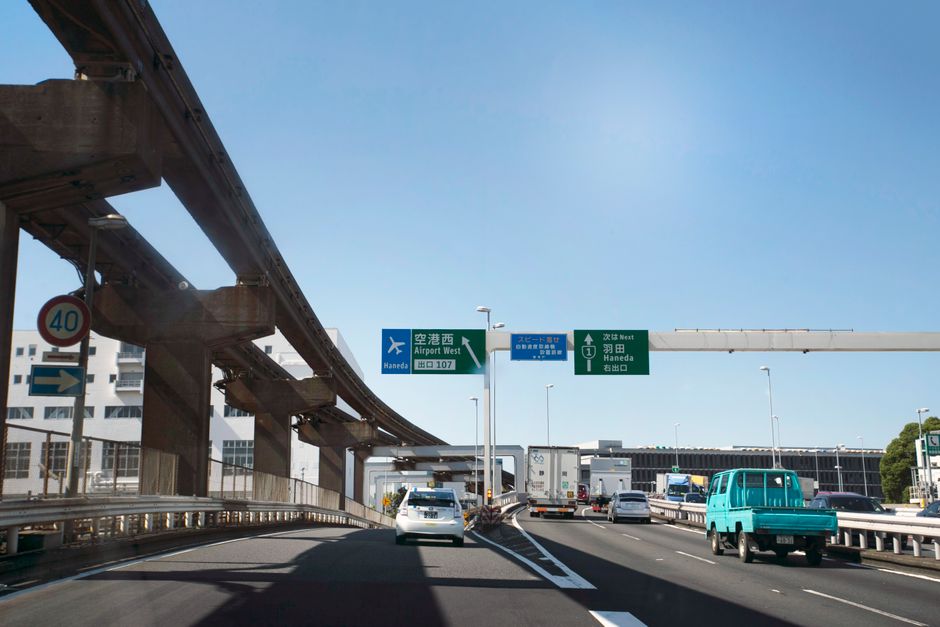
Two rail options dominate, and both are excellent. The Tokyo Monorail runs from just outside the international terminal to Hamamatsucho (inner city), while the Keikyu Line goes to Shinagawa and connects to the entire JR Yamanote loop. For most layover visitors, Keikyu to Shinagawa is faster and more versatile.
| Option | Destination | Time | Cost (approx.) | Best for |
|---|---|---|---|---|
| Keikyu Line | Shinagawa (→ Yamanote) | 13–18 min | ¥300–450 | Central Tokyo, most routes |
| Tokyo Monorail | Hamamatsucho | 18–22 min | ¥500 | West side, Tokyo Tower area |
| Airport Limousine Bus | Shinjuku / Shibuya | 40–75 min | ¥1,000–1,500 | Direct drops, no transfers |
| Taxi / Rideshare | Anywhere | 30–60 min | ¥5,000–9,000 | Groups, late night, no luggage hassle |
IC Cards — buy one first
Get a Suica or Pasmo IC card from any ticket machine at the HND terminal. Load it with ¥3,000–5,000 and it pays for every train, subway, bus, and many convenience stores. No need to buy individual tickets or work out fares. Tap in, tap out.
For broader layover planning — including how to handle luggage storage and security timing — the layover travel tips guide covers the basics that apply everywhere, including Tokyo.
Do you need a visa for a Tokyo layover?
Japan does not have a separate "transit visa" category in the way some countries do. To leave the airport and enter the city, you need to clear immigration — which means you need whatever visa status applies to your passport. The good news: Japan offers visa-free entry to citizens of many countries, including most of Europe, North America, Australia, and parts of Asia.
✓ Visa-free entry (short stays)
Citizens of around 70 countries — including the US, UK, EU member states, Canada, Australia, South Korea, and others — can enter Japan visa-free for stays of 90 days (some countries 15 or 30 days). Clearing immigration for a layover day trip is straightforward.
⚠ Visa required
If your passport nationality requires a visa to enter Japan, you'll need to arrange one in advance. Without it, you are restricted to the airside area of HND Terminal 3. The airport is still excellent, with its Edo Wonderland floor and observation deck accessible airside.
📋 Visit Japan Web
Japan's "Visit Japan Web" system allows pre-registration of immigration and customs info, which can speed up arrival processing. Worth completing before you land if you plan to enter the city.
⏱ Entry timing
Even with visa-free entry, clearing Japanese immigration takes time — allow 30–45 minutes at peak times. Factor this into your buffer alongside the train journey. The airport transit visa guide explains the full picture for various passport types.
Visa rules change. Always check the Japanese Ministry of Foreign Affairs website or your nearest consulate before travel. The information above reflects general policy but may not capture recent changes.
Ready to plan your Tokyo stopover?
Explore more of the Easy Layover guides — from airport lounges to city itineraries, there's a plan for every layover length.
Browse all city stopover guidesRelated guides for Tokyo and Asia layovers
If you're transiting through Asia — or want to compare Tokyo with other standout stopover destinations — these guides are worth a read.